


This is one of our Client Transformation Case Studies series, a deep dive into specific transformations you can see on our Client Results Wall. This case study covers one of our bodybuilding competitor clients, coached by Naoto, who works for our Japanese sister site, Athlete Body.
Yoichi started training in high school and competed in his first bodybuilding competition in 2018.
He placed fourth, but he wasn’t happy.
He couldn’t get as lean as he wanted. He felt he’d lost a significant amount of muscle in the process, and he described the diet as so brutal that it left him “with a kind of trauma.” He kept training, but decided bodybuilding shows weren’t for him.
Then six years later (in 2024), he decided to reach out about coaching.
He’d seen our approach: purposefully longer diet phases combined with lower training volumes, rather than maxed out. He’d also seen our results over the last few years with bodybuilding competitors*. He was keen to try competing again.
(*Ripped Body works with recreational trainees, but our Japanese sister site, Athlete Body, works with a lot of bodybuilding competitors. Yoichi is Coach Naoto’s client. Naoto made the coaching decisions below, and I’m writing them up.)
We are all familiar with the feeling of frustration and helplessness when you bust your ass, but your body doesn’t change the way you want it to. Yoichi is a bodybuilding competitor, but the principles apply to all of us. Here’s how we helped him win three championships (one in 2025 and two in 2026).
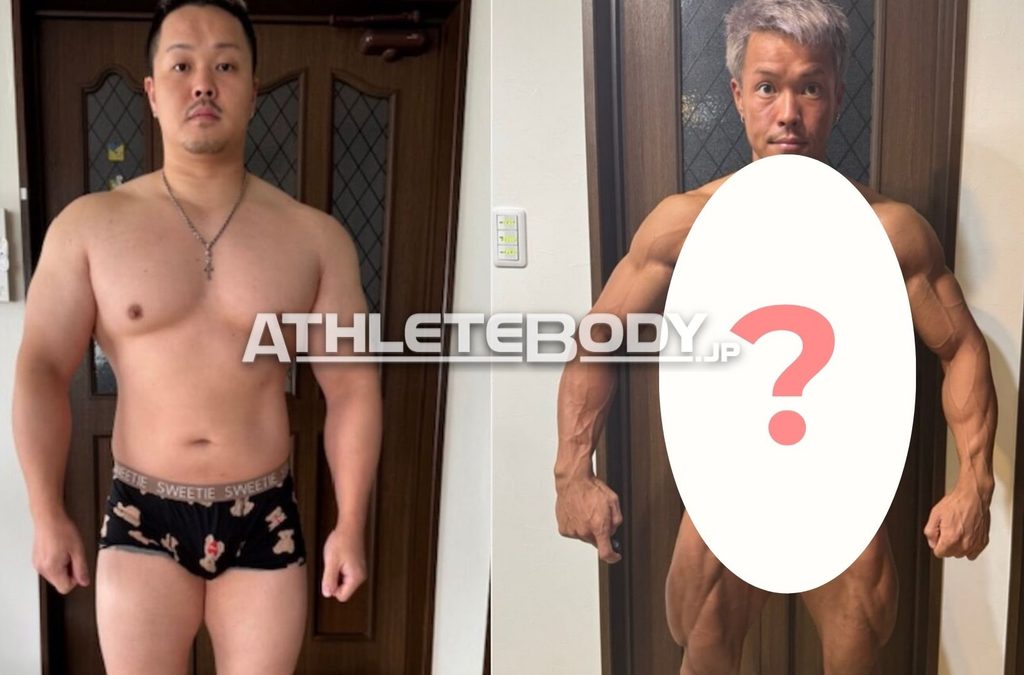
Winning His First Contest (2025)
When he applied, he weighed ~214 lbs (97 kg). To get into stage condition, we estimated that he would need to lose ~55 lbs (25 kg).
His target was 10 months away, but with this much fat to lose, it wasn’t straightforward to map out.
As a general rule, bodybuilding prep is best approached by losing weight faster early on, then easing off when body fat gets low and dieting becomes hard. So, this was the plan:
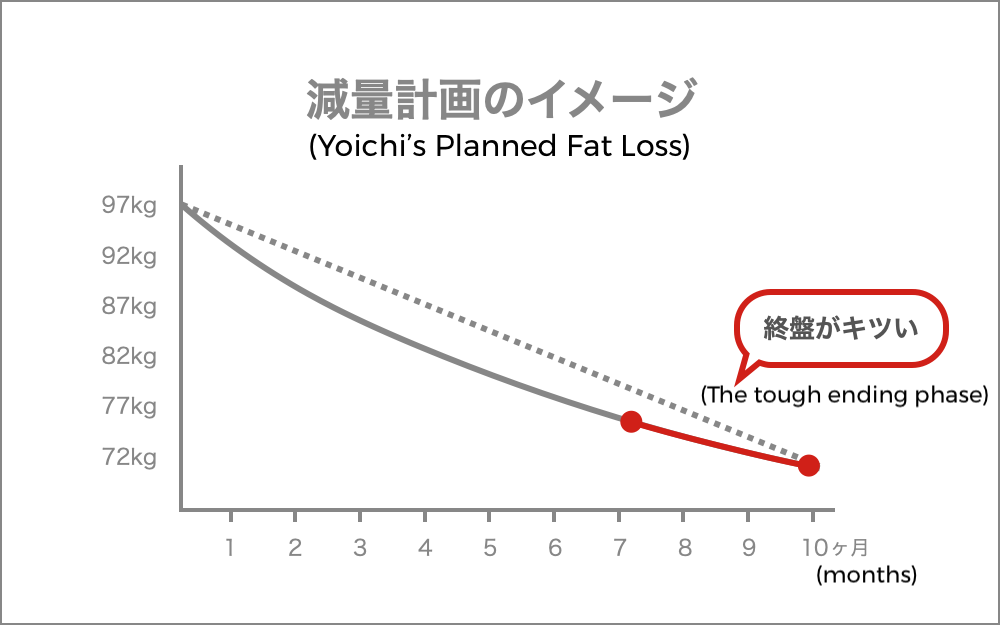
To be fully lean by contest day, we set an initial fat loss target of ~7–9 lbs (3–4 kg) per month. This was as fast as we could go while minimizing the risk of muscle loss. Still, it was a much faster pace than most people are used to, so we needed to closely monitor his recovery.
(This is mainly done by looking at training progress, soreness, sleep, stress, hunger, and energy levels: all the things we recommend you log in our progress tracker.)
If you consistently fail to recover, dieting and training become impossible to sustain, and work and general health suffer too. (These risks are higher for bodybuilding competitors, who are generally prepared to suffer more and tend to communicate less about it.)
The two key variables for controlling recovery are calorie balance and training. Because the calorie deficit was largely determined by the time frame we had, our ability to control recovery and fatigue came down to our training.
Training Program Design
Before coaching, Yoichi trained 4–5 times a week at a high volume. We kept the number of training days but cut back the sets per body part so he could still recover while dieting at the rate we needed to make stage condition in time. As the cut went on, we reduced the sets further.
He was uneasy about lowering his training volume, which is a natural feeling for a competitor who wants to do everything he possibly can in the run-up to a contest. However, his lifts held up right to the end, which is a good indication that muscle was maintained.
How It Went
As we worked through the cut, Yoichi commented on how manageable the food side was and how steadily his body fat came off.
By the seven-month mark, with three months left, it was clear that he’d be able to finish in shape for the contest.

The leaner you get, the harder it becomes to take off what’s left. This is especially true below 10% body fat. Lethargy sets in. Metabolic rate drops, forcing calories lower. Hunger builds, and sticking to the plan gets increasingly difficult. Over those last three months, there were several days where his appetite got away from him, and he ate too much. He described it as: “Once I started, I couldn’t stop.” That’s a natural response when body fat is already pushed to its limit. Competitors often torture themselves with guilt at moments like these, but each time we came back to the same thing: keep doing what you’ve been doing, without drama.
Because Yoichi had taken so much fat off in the first seven months, a few days of overeating didn’t derail things, and we could raise his calorie target a little, easing hunger.
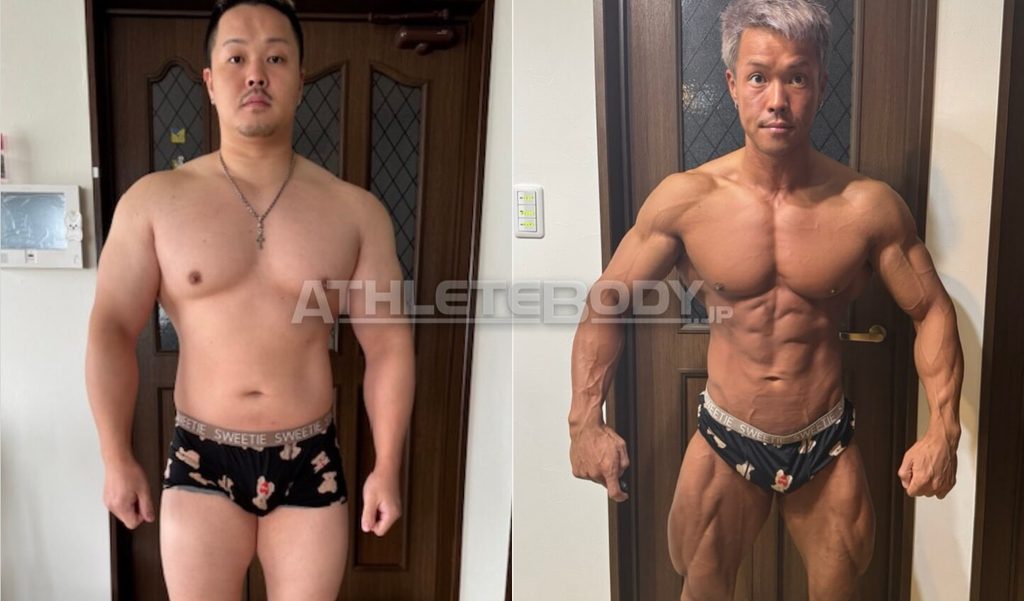
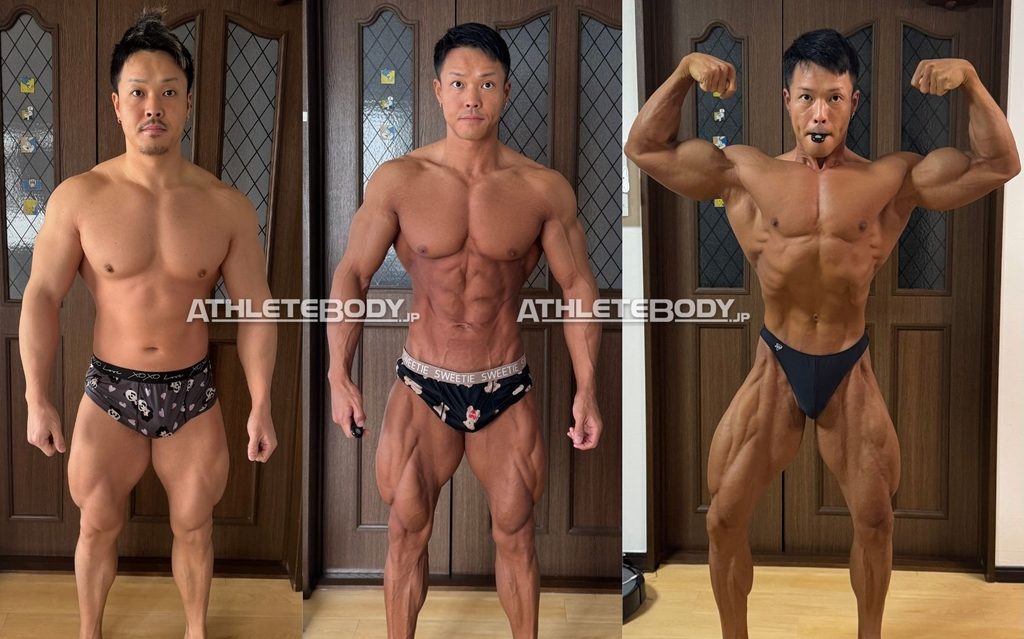
By contest day, he was shredded. You can see it most in his legs.
The result: first place.
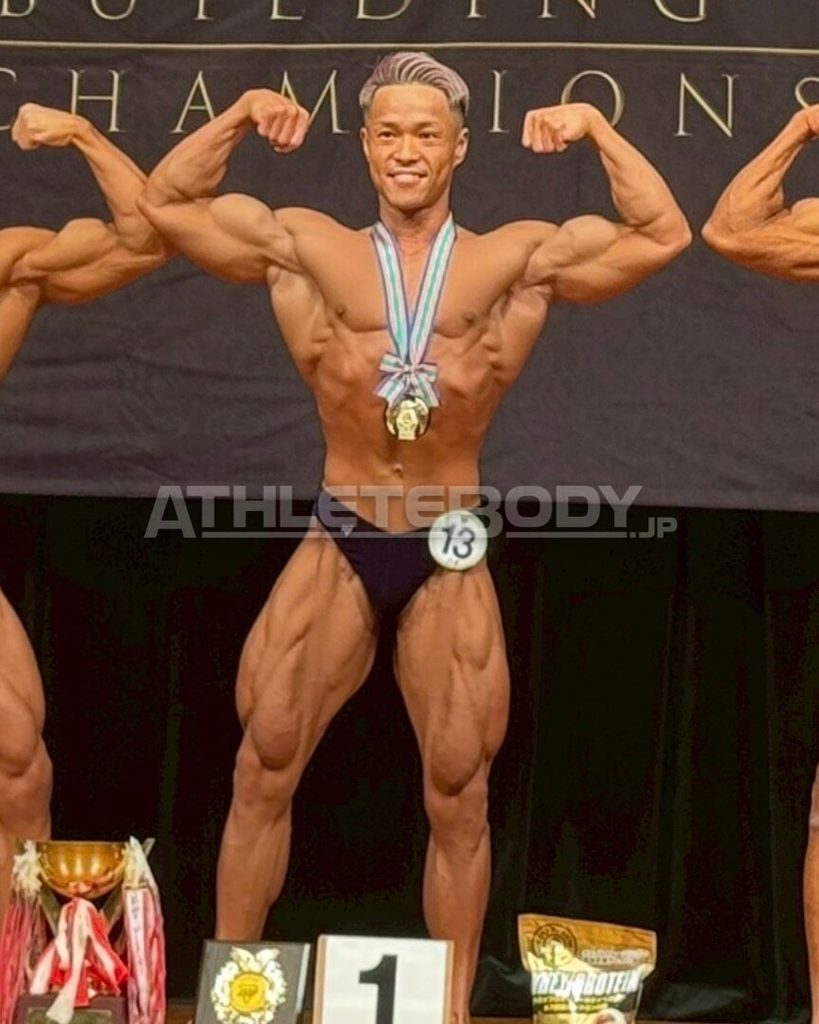
Looking back, Yoichi said it felt like his life had turned 180 degrees. There were a few things he took away from the 2025 season that he wanted to share:
- The idea of reducing training volume to manage fatigue.
- The mindset of resetting after something goes wrong mid-prep and returning to business as usual.
- The observation that the more seriously someone takes their sport, the more likely they are to overdo it. He no longer believes results come only from enduring suffering.
Winning the 2026 Contests
Building on the 2025 season, Yoichi won his regional championship in August, then the West Japan Championship (a much bigger competition) in September. The 2026 prep was easier than 2025, and that was by design.
He gained less weight in the offseason. We capped his bulk, which left him with less than half the weight to lose (~26 lbs / 12 kg). Less to lose meant we could cut more slowly, giving us more room for recovery.
We started early anyway. Prep began in mid-February, targeting the regional championship in August. It progressed well enough that as August approached, we decided to add the West Japan Championship in September, extending the total prep to roughly 7 months.
We lowered training volume by 30% compared to the offseason. As he got leaner, instead of adding training or pushing the diet harder, we focused on keeping fatigue manageable.
Then, in late April, Yoichi’s dog of 15 years passed away.
He briefly considered withdrawing from the contest. We gave him space rather than pushing him straight back into the diet and training, and he chose to continue. In mid-July, his other dog passed away as well.
Yoichi asked for this to be included, saying that if his experience helps someone going through something similar, he’d be glad.
He decided to keep going.
In the closing weeks, we calorie- and carb-cycled to test how his appearance changed. Five lower-carb, lower-calorie days, then two higher “refeed” days, with comparison photos each cycle. By the time he competed, we’d tested several carb loads and knew which worked best for him.
He wasn’t the biggest man on either stage. What beat competitors carrying more muscle was his leanness, which, given that this was the exact thing that broke him in 2018, I consider a roaring success.
We haven’t gotten permission from the photographer yet to use his stage photo, but I’ll share it when I do. Here’s how he looked:
Consider where the decisions that won this for him sit in our Muscle and Strength Pyramids.

The rate of weight loss and the size of the deficit are Level 1 of the Nutrition Pyramid. Carb cycling is Level 4, nutrient timing, and it came last, once everything underneath it was already handled.
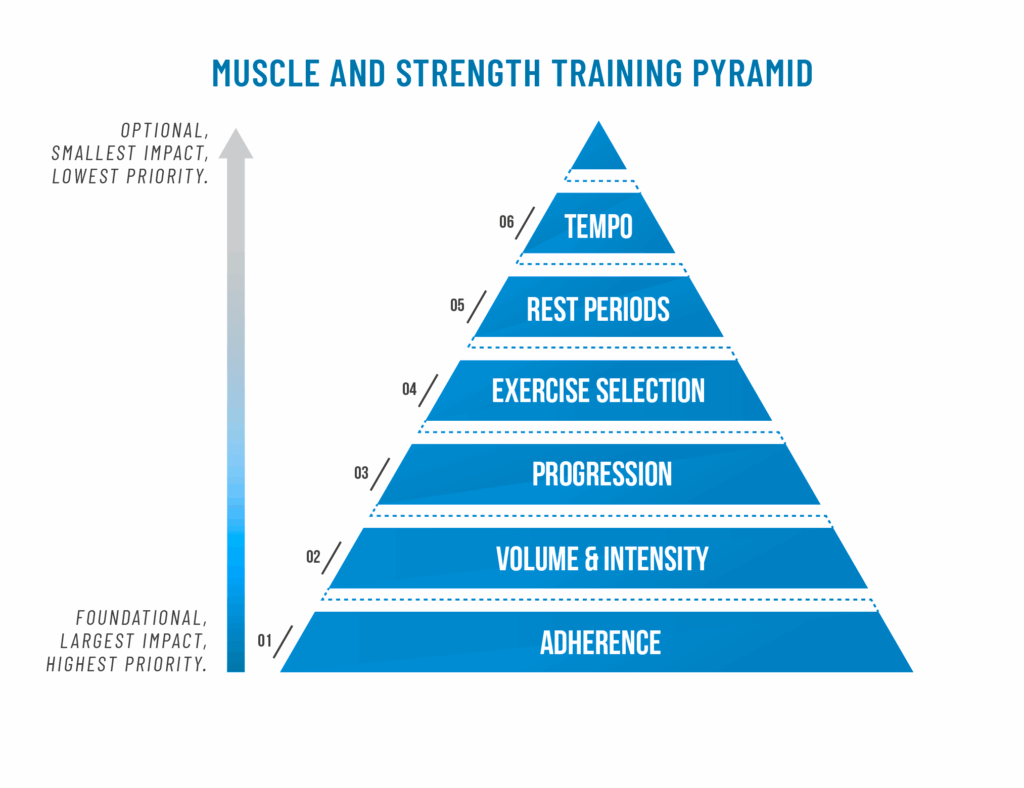
The training volume cuts are Level 2 of the Training Pyramid, and we made them to protect recovery, which serves Level 1 of that pyramid: adherence.
As has been the theme of the last few weeks: the answer to your plateaus is usually a level lower than where you’re looking.
Yoichi-san, you did your dogs proud. I am sure they are smiling down on you from dog heaven. Congratulations from us all!
🙋♂️ Matt and Sam have a few coaching spaces open at the moment. We don’t take on many competitors, but the thinking here (planning the phases, protecting recovery, letting the data drive the adjustments) is what we do with every client. If you’d like one of them in your corner, you can apply here.
(Japanese speakers: coaches Naoto and Kosei have you covered at AthleteBody.jp.)

Privacy policy.