
The 2020 version of The RippedBody Nutrition Setup Guide is finally here.
It combines an ebook, macro calculator, and 7-day email course guiding people through all the ways people commonly screw it up.
Think of it as the less-advanced cousin of The Muscle and Strength Nutrition Pyramid book.
The original guide I made in 2015 has been downloaded by close to 100,000 people. To say it did better than my wildest expectations would be an understatement.
I’ve learned a lot since then, and it was due for an update.
First, everything is brand new. I originally started thinking that I would make edits, but it turned into a complete re-write.
There are too many changes to write up everything, but I’ll cover the main ones here.
Character Additions
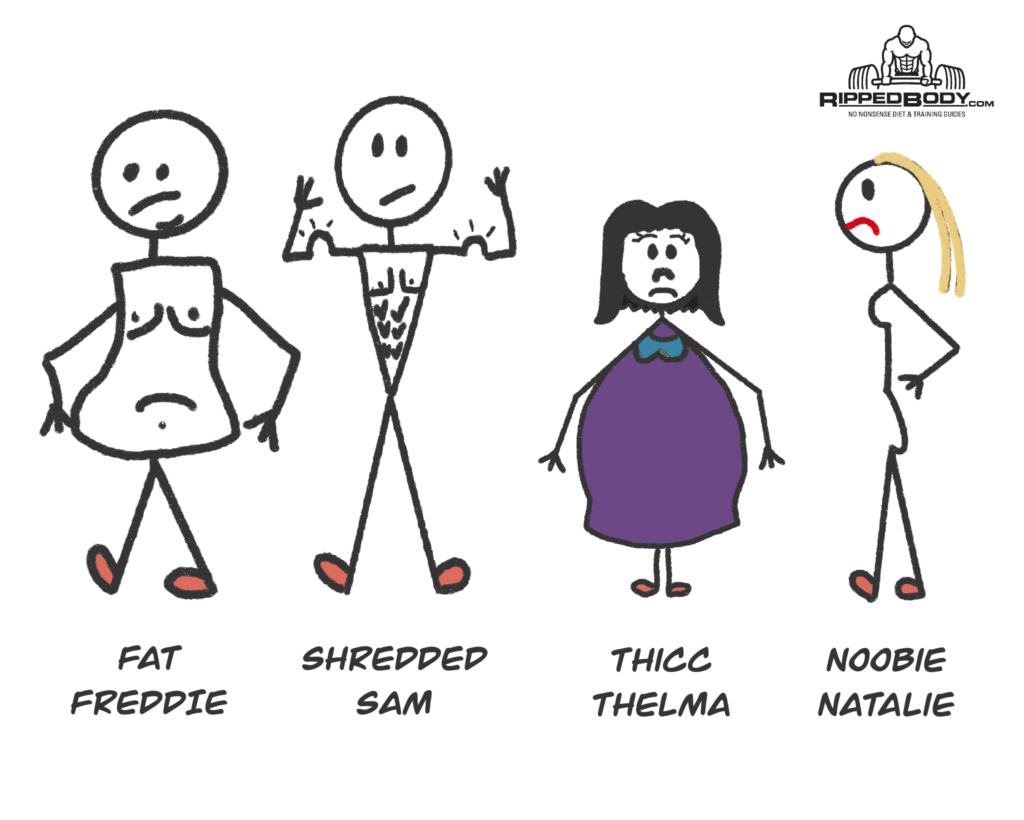
I’ve added four new characters to help explain what principles I apply given their unique situation, as I set up their diets.
References
I chose to not add references to this book for the same reason that I don’t on the rest of the site — I want to keep things casual, minimize clutter, and I know that 99% of readers will not use them anyway. The Muscle and Strength Nutrition Pyramid has 301 unique references. It this interests you, please consider purchasing it.
Calories — WHAT’S NEW AND WHAT’S CHANGED
1. I swapped to the Harris-Benedict formula for calculating BMR as it doesn’t require a body fat estimation.
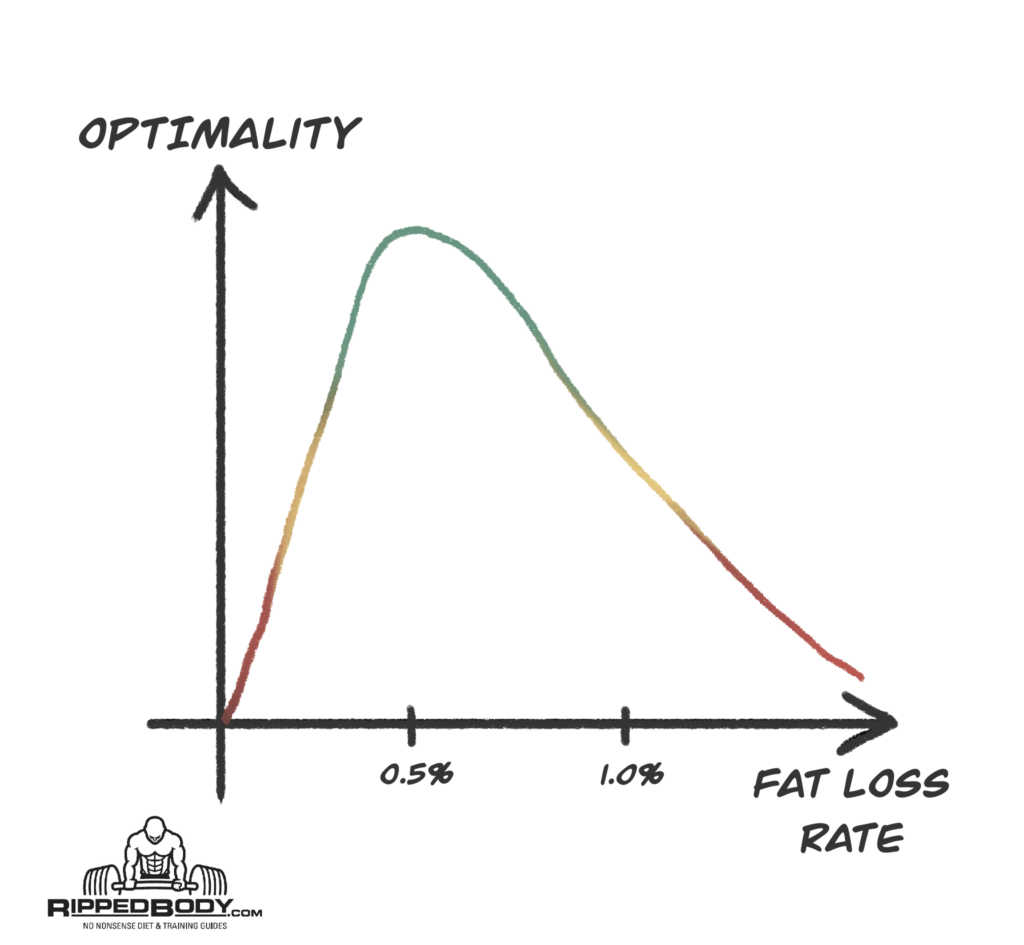
2. I changed the recommended rates of fat loss to be a percentage of body weight, rather than body fat percentage.
Also, despite saying people are free to choose between 0.5–1% of body weight loss per week, I’ve set the macro calculator to 0.75%, knowing that 0.5% is going to be the most sustainable rate for most, and also knowing that if we calculate for 0.75, the actual weight loss rate will be lower, due to metabolic adaptation.
3. I’ve removed the talk of the three methods of bulking (relaxed bulk, controlled bulk, and lean gain) as I felt it unnecessarily complicated things. Frankly, I think everyone should go for the middle option. I’ve left the nuance to be covered by my bulking article.
4. I decided to split the trainee categories into four levels: beginner, novice, intermediate, and advanced. The “beginner” level is not present in The Muscle and Strength Nutrition Pyramid, but I felt necessary, as this will reach a broader audience.
Macros — WHAT’S NEW AND WHAT’S CHANGED
1. Protein intake is now calculated based on body weight rather than by lean body mass. This is much easier than asking people to estimate their body-fat percentage first, and the results are roughly the same anyway.
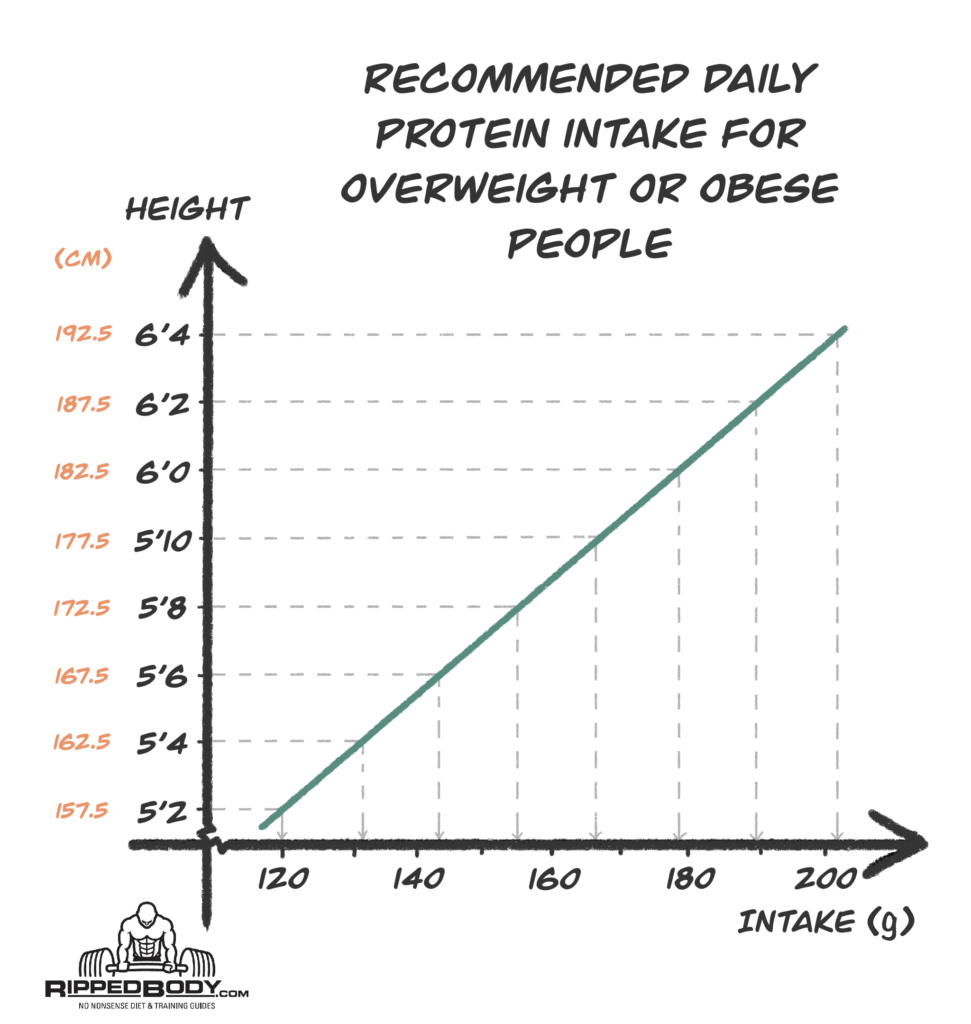
2. As protein intake based on body weight will lead to unnecessary high intakes in those who are overweight or obese, I put a quick line sketch in the guide so people can simply read off the recommended intake for their height.
3. The guidelines for macronutrients now align with those in The Muscle and Strength Nutrition Pyramid.
4. I moved fiber intake guidelines to the micros chapter to put it with the vegetable intake section, as fiber is a type of carb, not a different macronutrient.
Micros — WHAT’S NEW AND WHAT’S CHANGED
1. I managed to remove half the text of this chapter while retaining all the necessary information.
2. I added a section noting special populations at risk of deficiencies, based on the content of The Muscle and Strength Nutrition Pyramid.
Nutrient Timing — WHAT’S NEW AND WHAT’S CHANGED
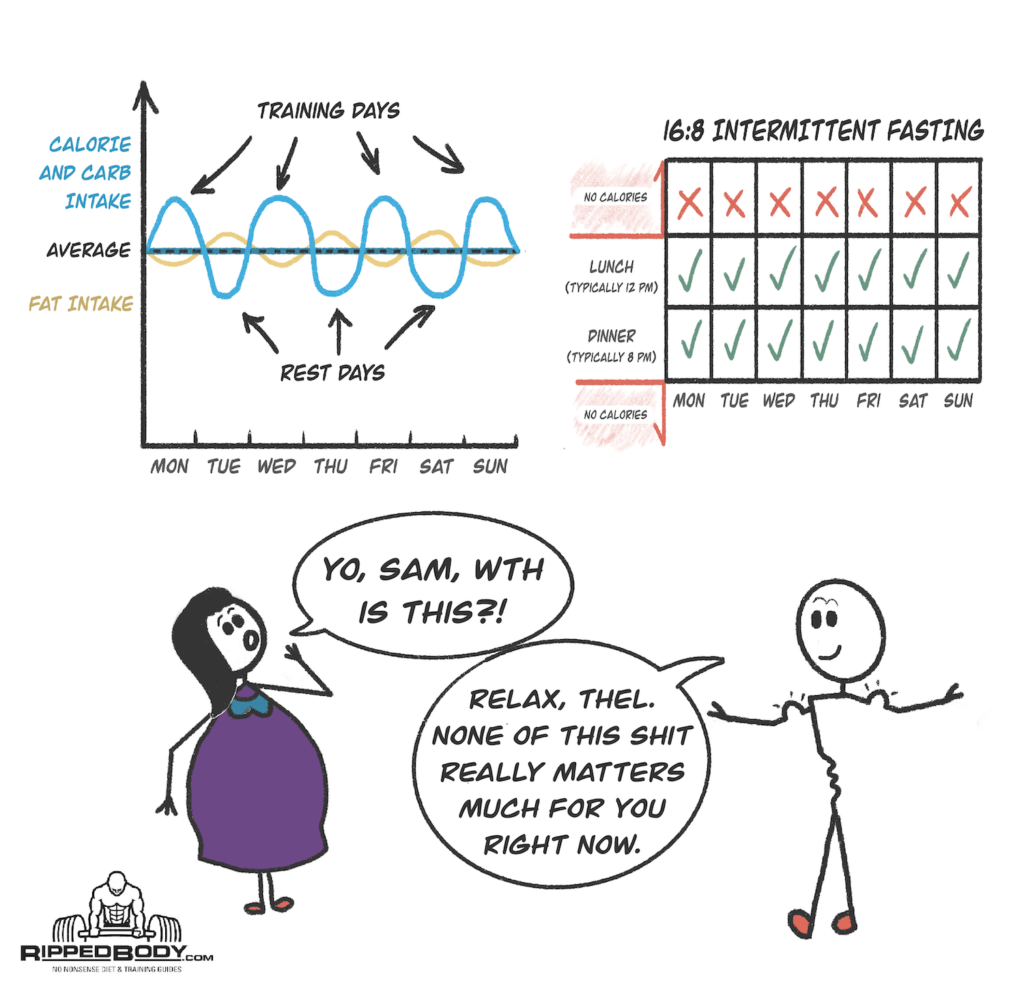
This section is around the same total word count, but it’s much easier to read, understand, and implement. This is mainly thanks to the addition of multiple sketches, but also because I’m a much better writer now than I was then.
The main technical difference is that I swapped the BCAA recommendation to whey protein prior to training fasted. This now matches the recommendation in my article on the subject. (Training Fasted? Take Whey, Not BCAAs.)
Supplements — WHAT’S NEW AND WHAT’S CHANGED
In the previous version of the book, I allowed my personal hate for the supplement industry to get in the way of providing the kind of nuanced detail I should have. You’ll see that I have expanded heavily, but the main message remains the same — fix your diet before worrying about supplementation.
Download the new edition by entering your email address below.

Please keep questions on topic, write clearly, concisely, and don't post diet calculations.
Privacy policy.
Hi, how could I avoid going over my fiber intake (excessive fiber) by eating nutrient dense foods? Seems like it’s always going over.
Hi Nayan,
Well, just eat less fibrous foods. But if you’re happy with your diet and feel good, there’s no need to change things. What I have in the book are guidelines, not rules.
Hi Andy
I really enjoy your site and I just started following it closely in terms of recommendations . So thank you
My questions is since i started taking Creatine at 5g daily, ive gained 5 pounds of water weight. I’ve continued to drink extra water but I’m always feeling bloated and not too hungry. I’m about 150 pounds and think I should reduce the creatine to 3g daily?
I’m trying to lose a few pounds of fat but maintain the muscle I’m developing.
Thanks
You could try, but I can’t see the reduction making a difference, Tony. The majority of the water weight will be in your muscles. The hunger won’t be related. The bloated feeling, if it’s around the stomach area, might be to do with another diet change rather than the creatine. Unless you’re taking something other than creatine monohydrate. (I think I recall some non-monohydrate creatines causing issues. My mind may be making that up though. :))
Thanks for the reply. Ii its Creatine monohydrate and I haven’t changed my diet. I pretty much eat the same things – lean proteins and lots fo veggies. Nothing different but that. It’s crazy but i guess I’ll see what happens. Maybe it will settle out with lower doses.
Thank you for your reply.
Hi Andy,
In “The RippedBody Nutrition Setup Guide v3.5” and “The Muscle and Strength Nutrition Pyramid v2.0.3” the macro for daily minimum fat depends on the Bodyweight.
In “The Last Shred v2.3.1” the macro for daily minimum fat depends on lean body mass and has a higher value, it also explains that fat being essential for hormonal regulation and function.
What is the reason for this difference?
The former are my updated and simplified guidelines. I’ll be changing The Last Shred to match when I update it. Thank you for asking. 🙂
Hello Andy! First of all, I want to thank you for the guide you’ve written.
If I drink a protein shake, am I breaking the intermittent fasting?
Hi Farah, a very common question.
Any calorie consumption will break your fast. The question is, does that matter? I’d argue not.
Better to take protein so you have amino acids in your bloodstream to minimize muscle breakdown than not. More on this here: Training ‘Fasted’? Take Whey Protein, Not BCAAs
Between the ‘nutrition setup guide’ mentioned here and the ‘muscle and strength pyramid’ books, what’s the big difference? Is this the more approachable, easier to read version, where the ‘muscle and strength pyramid’ books are more theoretical?
I just bought the ‘muscle and strength pyramid’ bundle, and was wondering whether I should read this guide first.
Additional related question, I also downloaded ‘The Complete Guide To Setting Up Your Diet_v2.3.4’. Was this the older version of the ‘nutrition setup guide’ or was it specifically written to be used alongside the 7 day e-mail course?
Hi Dries, thank you for the question. The Muscle and Strength Nutrition Pyramid is for a higher level of trainee (or trainer).
They both discuss theory, but only to the extent necessary to guide practical application. But this book is an in-between step for people who are interested in learning more, but not ready for the kind of detail we have in The Muscle and Strength Nutrition Pyramid.
For example, plenty of people use the macro calculator on the site without wanting to understand the reasoning behind it. That’s cool, but at some point, they’ll need the next educational step. The Muscle and Strength Nutrition Pyramid has would be too detailed for these people. This bridges the gap.
I am a lifelong dieter (like you, I have tried them all, the latest being keto, but I’m ready to just eat a normal diet). I work in an office, but offset that with morning and evening workouts (Jiu Jitsu before COVID-19 hit) and active weekends. I guess I would relate most to Noobie Natalie. What are your thoughts on using my Apple Watch for tracking my TDEE, as it comes higher than your calculator? Also, what about additional calorie burn on high activity days as a way to eat more (i.e., on the weekends I tend to burn an extra 1000 cals/day because I am so active – long workouts, hiking, mountain biking, etc) – that would essentially be my way of calorie cycling
Hi Jennifer, I’d ignore the calorie number given on your watch. All of these devices have inaccuracies.
Set things, then forget it. Track over several weeks. Adjust accordingly.